
Other Features
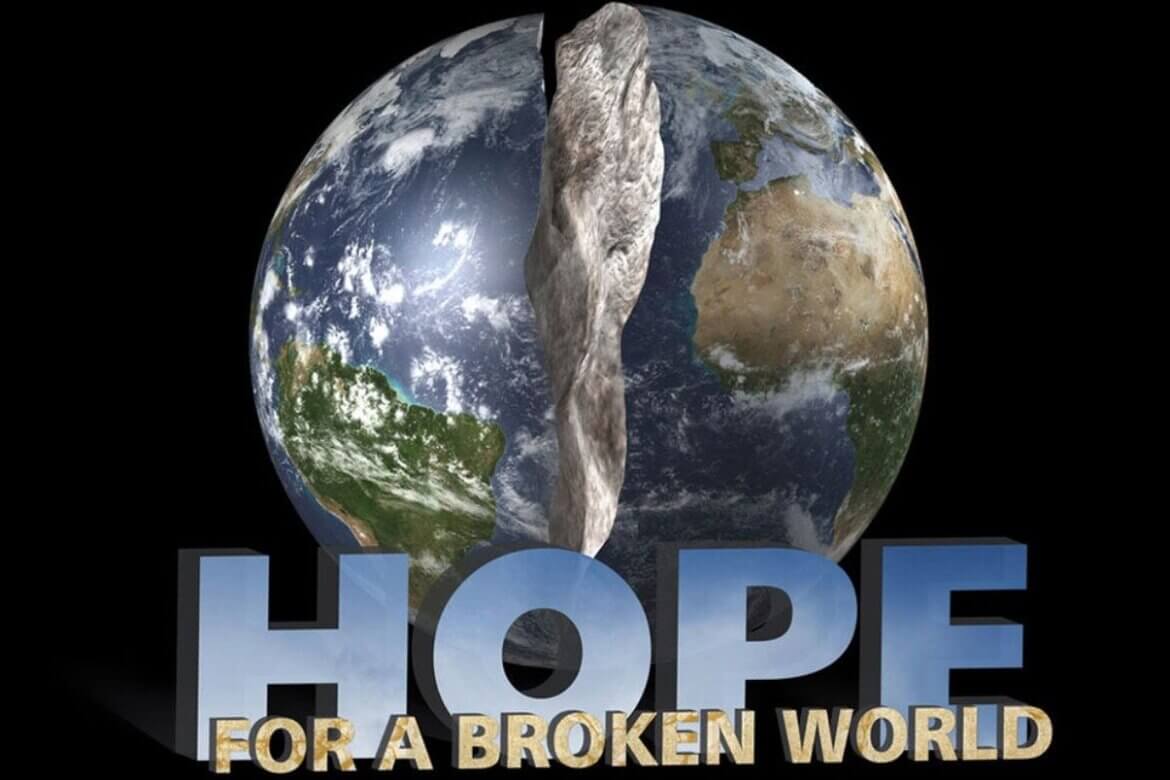
Weaving a Narrative of Hope for a Broken World
Jim Morin, Talca, Chile
Volume 40 Issue 7, 8, & 9 | Posted: October 22, 2025
Last year I was diagnosed with pulmonary fibrosis which made me intensely attentive to the fragility of breath and the power of the word. I was reminded of the biblical story where God’s breath gives life to Adam along with the word which bestowed him with power over creation. In our times the abuse of this power over the earth, now surrounds us globally and literally with suffocating smoke, along with declarations which deviate our attention from the real problem by blaming immigrants, the homeless, even the educated elite. This realization has given me a clear purpose: to use what breath I have left to articulate words of hope that may help our children and grandchildren understand how to navigate through this stormy period of our age.
In our times, political polarization, economic instability, and climate disasters slash at the fabric of our society, creating widespread anxiety. Many are left feeling lost, adrift, isolated, scared, and angry: emotions that demagogues systematically manipulate through digital algorithms for their own economic and political benefits.
What follows is an attempt to make sense of this systemic disintegration, an effort born from conversations within a circle of Canadian friends (see “Hello Prime Minister Carney in the Letters to the Editor tab). Some of us have known each other for over five decades and, in our diversity, share a common commitment to justice and peace. We meet to discern and deliberate on how to weave together the voices of diverse thinkers who can offer a coherent narrative to guide us on our turbulent journey of faith. I invite our readers to ponder the possibility of multiplying such circles.
The Diagnosis of a Three-Dimensional Sickness
Through dialogue, our Circle has come to recognize that our global society is suffering from a systemic illness with three primary manifestations: a nihilistic political decay, a cannibalistic economic engine, and a profound spiritual void.
First, the political manifestation, which Naomi Klein has termed “end times fascism.” This is not a simple repeat of past ideologies but a new and dangerously nihilistic project that does not promise a better future but instead is actively “betting against it.” The vision of nihilistic capitalists is to transform wealthy states into “armed bunkers” to survive the crises they themselves are accelerating: a worldview she considers genocidal at its core. This decay, as economist Richard Wolff points out, is the logical result of a nation in denial that masks its systemic failures with a “political theater” of grievances and scapegoating.
Second, this toxic political culture is fueled by what, Indigenous scholar Robin Wall Kimmerer calls the “Windigo economy.” The Windigo is a monster from Anishinaabe tradition with an insatiable hunger that consumes everything while leaving it more emaciated. It is a perfect metaphor for our economic system, based on endless growth and consumption, which is now “cannibalizing its own planetary host.” This extractivist model treats nature and humanity as mere objects, generating massive inequalities and an unpayable “ecological debt.”
This diagnosis of a predatory economic system is powerfully echoed by a prophetic voice from the Global South. In a joint letter, Catholic bishops of Africa, Asia, Latin America and the Caribbean frame the climate crisis not as a technical failure but as the direct result of a “structurally sinful” economic model. Speaking from their pastoral proximity to the world’s most vulnerable, they identify its core characteristics as “extractivism, consumerism, and individualism.”
They argue that this paradigm, which treats both nature and humanity as objects for exploitation, has created a massive “ecological debt” owed historically by the Global North to the South. Their call for climate justice is not a plea for charity, but a demand for a radical overhaul of the global financial architecture to rectify this profound moral imbalance.
Third, this breakdown originates from a spiritual and narrative void. As the Korean philosopher Byung-Chul Han argues, we have lost the art of authentic storytelling, replacing it with commercial “story-selling.” The grand narrative of neoliberalism, as George Monbiot points out, is crumbling, leaving a vacuum that is being filled by toxic and regressive accounts.
Toward a Praxis of Hope
To diagnose the illness allows us to begin to imagine the cure. By listening attentively to the thinkers which have entered the conversations of our Circle, a vision has begun to emerge, one that is a holistic alternative, a transformative project that integrates a new politics, a new economy, and, fundamentally, a new story.
This is where the work of Howard Richards (1938-2024), becomes indispensable. As a philosopher of social science with his background in law, Howard demonstrated something fundamental: the legal system is not based upon natural law but a constitutive framework that creates and sustains capitalism. Understanding this, he argued, is the key to transforming it.
First, we must understand the system in order to change it. Howard demonstrates that capitalism is not a law of nature but a “game” whose rules were written in the language of law. Private property, the wage labor contract, and the corporation as a legal person are the constitutive rules that coerce us into a system of competitive accumulation. Understanding this is liberating: if the rules were created by human beings, they can be changed by human beings.
Second, we must build an alternative. Howard did not advocate for a violent revolution but for gradual pragmatic transformations through the creation of what he called “unbounded organizations”: worker cooperatives, social enterprises, community land trusts, and other institutions not bound by the sole rule of maximizing profit.
The strategy is to weave these alternatives into a robust “solidarity economy,” an ecosystem that operates with a logic of cooperation and well-being. My own praxis as an educator, from projects in Canada to the creation of programs and networks in Chile, has been guided by this conviction: the search for truth must orient ethical praxis toward the stewardship of the human good.
Third, we must tell a new story. For this change to be possible, we need a narrative that gives it meaning. Here I return to the voices our Circle has attended. The new story could consider what Monbiot describes as “private sufficiency, public luxury,” where the market serves society and not the other way around, and where we rebuild our common good.
This vision is enriched by Kimmerer’s ethic of “the honorable harvest,” which teaches us to take from the earth with gratitude, respect, and reciprocity. This project needs to be animated by a renewed ethical commitment, by an “expanded international solidarity” as Klein calls for, and by the decolonization of our minds from the “grammar of objectification.”
In conclusion, the choice we face is clear: the nihilistic isolation of the “armed bunker” or the resilient solidarity of a global community. The task we have set for ourselves in our Circle is urgent, necessary, and hopeful: to choose the latter and to build, word by word, action by action, that irresistible alternative. This journey, however, is not ours alone. It expands and gains strength when others join in, forming and multiplying circles of shared discernment and courageous, responsible action. Share with us your stories and insights if you advance in forming such circles. Write me at: new_narrative@outlook.com
For readers interested in knowing more about the voices mentioned, consult the following.
- Byung-Chul Han on the crisis of narration and in dialogue with Gabriel Marcel on hope. https://www.youtube.com/watch?v=PGX0YKWm074&t=427s; https://www.youtube.com/watch?v=azpjZF47X9c
- Naomi Klein on end times fascism. https://youtu.be/9rTkfoZiuvs?si=hsUcrPnDcrZfguZt
- Richard Wolff on imperial decline. https://www.youtube.com/watch?v=0FRlizPbm_E
- George Monbiot proposal for a new story to overcome neoliberalism. https://www.youtube.com/watch?v=BPMlfHzCoUI
- Robin Wall Kimmerer economic ethic of the honorable harvest. https://www.youtube.com/watch?v=Lz1vgfZ3etE
- Southern Catholic Episcopal Conferences: Call For Climate Justice. https://drive.google.com/file/d/1TBoG7aoqzkvqeCZ56BED-y86YepHktIF/view
- Parliament of the World’s Religions, declaration, Towards a Global Ethic. Towards a Global Ethic. https://parliamentofreligions.org/wp-content/uploads/2023/05/Global-Ethic-PDF-2020-Update.pdf
Jim Morin, Talca, Chile