
From Farm and Garden to Table
George Klima, Victoria
Volume 40 Issue 4, 5 & 6 | Posted: July 25, 2025
Lorraine, my life partner, takes great delight in each developing rose bud as it appears in the back garden. She watches the bud as it blossoms and then she finds joy in that blossom. As more roses appear we look for the bees that soon follow.
I feel the same way about my vegetables as their seeds first poke their tiny bit of green above the soil, as they grow toward the light, and slowly take on their mature shape, whether it’s a big leafy squash, a vigorous tomato, or a spindly dill.
As plant life comes into being we can wonder at the sacred miracle that brings it about.
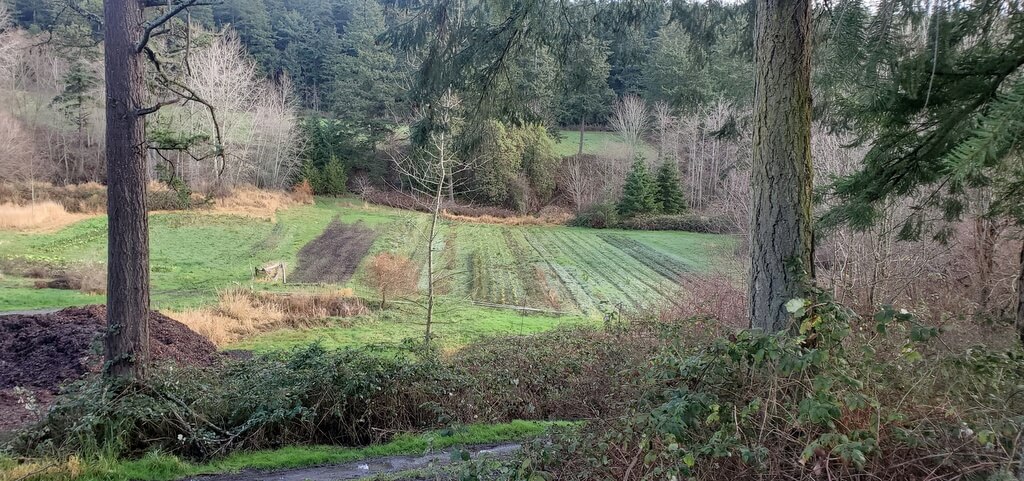
When I work at the farm in the Blenkinsop Valley, I can continue to wonder at the development of a crop as it matures. Of course, a farm creates a richer set of relationships than a garden does. A farm operates on a scale where the decisions have consequences for many, many insects, birds, wee mammals, frogs, and the farm workers. That’s true above ground. Below ground, the effects are no less profound. There is a vast ecosystem that we rarely notice, an ecosystem where the worm is megafauna, compared to other soil creatures, it is an enormously massive burrowing creature.
Farming practices obviously have an effect on crop yields: do this and you get this many kilos of tomatoes; do that and you get that many kilos. However, less obviously, farming practices also have a consequence for the nutritional content of the produce being grown, which is typically signalled by the taste of the food. We can usually taste the difference between locally grown seasonal organic fruits and imported fruits. As we know, imported fruit is picked before it is fully ripe and then it is artificially ripened during transit.
When we focus on the nutritional content of food we realize the sacred trust we have in farmers. They care for the soil, remove weeds, provide water, harvest, care for their workers, and bring their crops to market.
Grocers and “middlemen” are sometimes reviled for driving up the cost of the food we buy. Possibly farmers could keep a bigger share of what we pay for our food. The farmer is busy in his field and we are busy with our jobs. Should we not respect the wholesaler and the truck driver as a respected part of the continuum from farm to table?
We bring home our food from the grocer, we wash, prepare, and then we eat it. Ideally, we want to be mindful of that baked potato as we bite into it. We can respect the potato as we eat it.
Let us acknowledge the sacredness of each of us. But let us not stop there. That baked potato I just ate is just as sacred as you and me. It is also just as sacred as the soil in which the potato developed. What’s more, the farmer, the truck driver, the grocer, and the cook, are all messengers who bring that sense of wonder to our table.
The journey that began with a budding rose or a squash leaf and ended bringing joy and nourishment is a reason for gratitude and wonder.
George Klima is a new ICN Board Member.
George Klima, Victoria